

Why So Many People Feel Restless Even After They Finally Slow Down
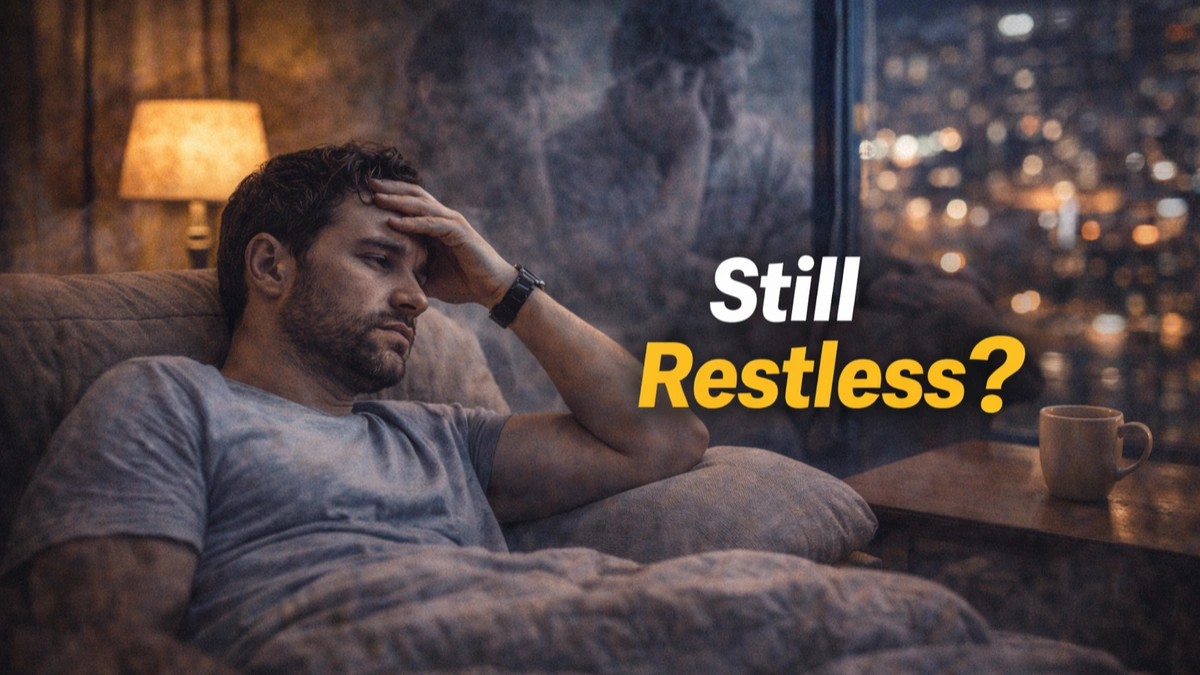
Many people spend years craving a slower pace. They imagine calm mornings, lighter schedules, and breathing room. So when life finally slows down, the expectation is relief.
But for many, the opposite happens. Instead of peace, restlessness appears. The body rests, but the mind stays unsettled.
This experience is confusing, because it feels like slowing down was supposed to fix everything.
Why Slowing Down Can Feel Uncomfortable
Constant busyness acts like noise. It fills mental space and distracts from deeper thoughts. When life slows, that noise fades — and what’s underneath becomes audible.
Unprocessed thoughts, postponed emotions, and unresolved questions resurface. The mind, used to stimulation, struggles with quiet.
This reaction mirrors what happens in quiet burnout, where exhaustion exists even without overload — a pattern explored in why people feel quietly burned out. Rest reveals fatigue that activity concealed.
Restlessness isn’t a failure of rest. It’s a response to sudden stillness.
The Identity Shift That Comes With Slowing Down
For many people, identity is tied to movement. Doing, achieving, responding, progressing. When pace slows, identity feels unclear.
People ask themselves who they are without urgency. Without deadlines. Without constant forward motion.
This uncertainty feels similar to being mentally stuck — a state examined in why people feel mentally stuck. The problem isn’t lack of direction, but overload of possibility.
Without immediate tasks defining the day, restlessness fills the gap.
Why the Mind Doesn’t Slow Down With the Schedule
Slowing down externally doesn’t instantly rewire internal pacing. The nervous system needs time to adjust.
When that adjustment doesn’t happen right away, people assume something is wrong. They try to fill the silence — with screens, plans, or tasks.
But the discomfort often fades only when the mind learns that quiet is safe. That there’s no emergency. That nothing needs fixing immediately.
Restlessness often marks the transition between overstimulation and calm. It’s not the destination — it’s the passage.
Feeling restless after slowing down doesn’t mean rest failed. It means the system is recalibrating.
Peace rarely arrives instantly. It emerges gradually, once the mind stops searching for the old noise.
Sometimes, restlessness is simply the sound of the mind learning a new rhythm.
About the Author