

Why So Many People Feel Mentally Stuck Even When Nothing Is Actually Holding Them Back
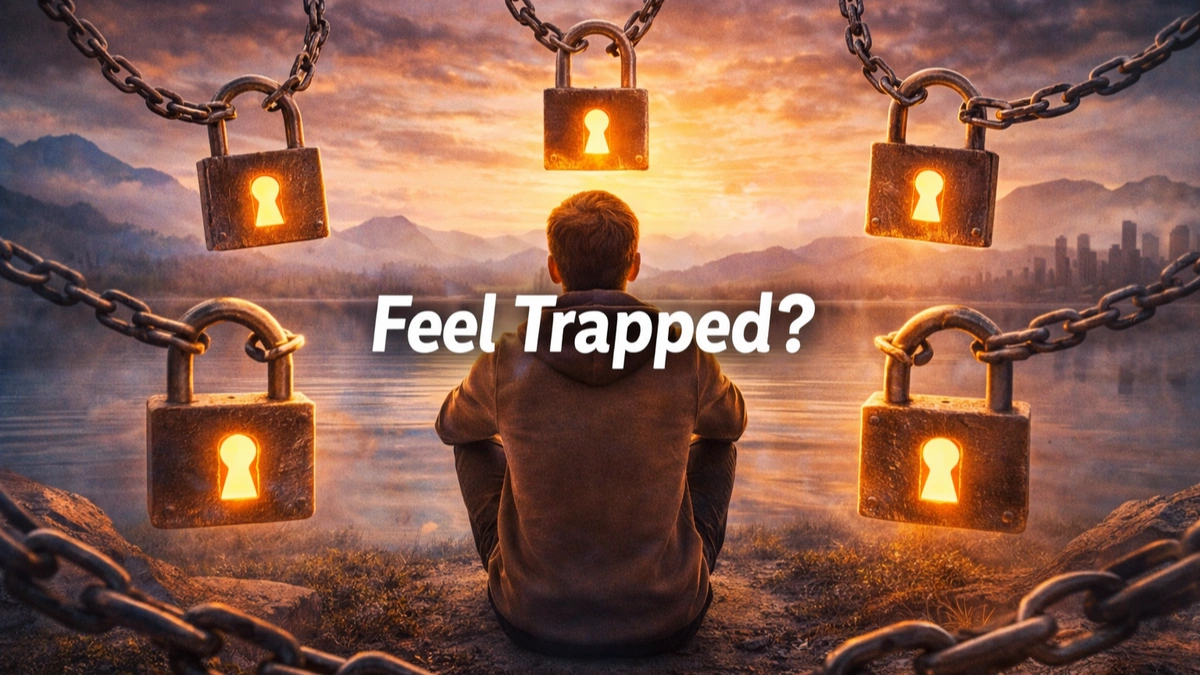
Many people describe their current phase of life with a single word: stuck. Not trapped, not failing — just unable to move forward in a way that feels meaningful.
What makes this feeling confusing is that nothing obvious seems wrong. Opportunities exist. Choices are available. Life appears open. Yet internally, there’s a sense of immobility.
This kind of mental stuckness is becoming increasingly common, especially during stable periods of life.
When Too Many Options Create Stillness
One of the paradoxes of modern life is that freedom doesn’t always feel freeing. When choices expand without clear emotional direction, decision-making can slow to a stop.
People aren’t blocked by lack of options. They’re blocked by uncertainty about which option aligns with who they are becoming.
This often overlaps with quiet burnout — a state explored in why people feel quietly burned out. When energy is low, even good opportunities can feel overwhelming.
The mind responds by pausing. Not as a failure, but as a protection.
Why Mental Stuckness Feels Personal
Because there’s no external barrier, people turn the blame inward. They assume they’re procrastinating, lacking discipline, or wasting potential.
But mental stuckness is rarely about laziness. It’s often about emotional overload. When the mind processes too many inputs without resolution, forward momentum slows.
This is why mental stuckness frequently coexists with emotional exhaustion, similar to what’s explored in why people feel emotionally drained even when nothing is wrong.
The system hasn’t failed. It’s overloaded.
Why Pushing Harder Rarely Works
In moments of feeling stuck, people often respond by trying to force movement. New routines, new goals, new pressure.
But pressure doesn’t always restore clarity. In many cases, it deepens resistance.
Mental stuckness isn’t resolved by speed. It’s resolved by alignment — a sense that the next step actually fits. Without that alignment, action feels hollow.
This is why stuckness often dissolves not through effort, but through understanding.
Feeling mentally stuck isn’t a sign of regression. It’s a pause between versions of yourself.
Clarity often returns gradually, once the mind feels safe enough to settle. When urgency fades, direction reappears.
Sometimes, being stuck isn’t about being unable to move. It’s about waiting for the right internal signal to move with meaning.
About the Author