

Why Many Indians Feel Quietly Unsatisfied Even When Life Seems Settled
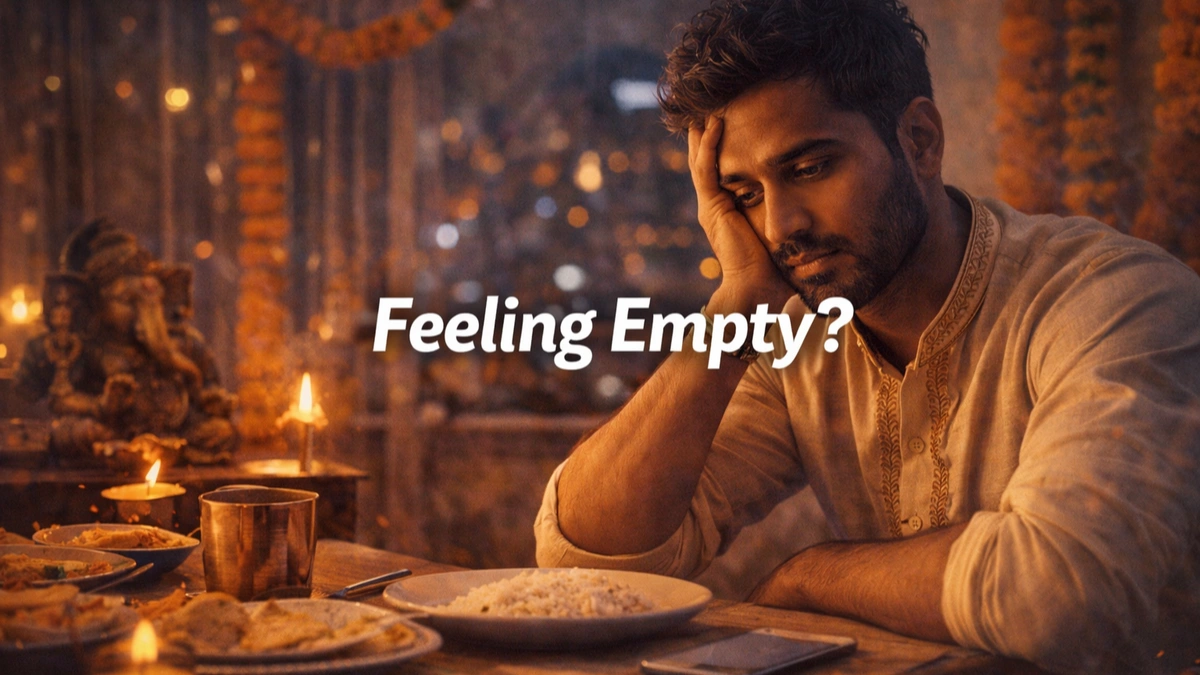
For many Indians, there comes a phase when life finally looks settled. Work feels stable, routines are predictable, responsibilities are under control, and nothing feels urgently wrong. From the outside, it appears like a phase people work hard to reach.
Yet internally, a quiet dissatisfaction begins to surface. Not frustration. Not unhappiness. Just a lingering sense that something is missing — even when everything seems to be in place.
This feeling is subtle enough to ignore, but persistent enough to return again and again.
When Stability Stops Feeling Like Fulfillment
Stability solves many problems, but it also removes certain distractions. When constant pressure reduces, the mind finally has space to reflect. And with reflection comes awareness.
Many people assume satisfaction automatically follows stability. But fulfillment depends on meaning, not arrangement. Without emotional engagement, even a well-organized life can feel flat.
This is why dissatisfaction often appears after things settle, not before. The survival phase ends, and the question quietly shifts from “How do I manage?” to “Is this enough?”
This experience overlaps closely with how many Indians feel constantly behind even while doing well. Progress continues, but satisfaction lags behind.
The mind starts searching for meaning where it once searched only for safety.
The Role of Social Expectations and Silent Comparison
In Indian society, certain milestones are strongly associated with success. When people reach them, satisfaction is expected to follow.
But emotions don’t obey timelines. When the expected happiness doesn’t arrive, people question themselves instead of the expectation.
Comparison quietly deepens this dissatisfaction. Even during settled phases, exposure to others’ achievements and lifestyle upgrades creates a subtle pressure.
People aren’t necessarily unhappy with their lives — they just feel unsure why contentment feels incomplete.
This emotional ambiguity is closely related to the confusion many experience during stable periods, as explored in why emotional confusion appears even when life is going fine.
Why This Dissatisfaction Is Rarely Acknowledged
Quiet dissatisfaction doesn’t feel valid enough to talk about. There’s often guilt attached — especially when others are struggling more.
So people silence it. They tell themselves to be grateful. They minimize the feeling and move on.
But unacknowledged emotions don’t disappear. They settle in as restlessness, low motivation, or a persistent urge for change without clarity.
Over time, this unresolved dissatisfaction can create mental fatigue — a pattern that mirrors how mental pressure builds during stable phases.
The dissatisfaction isn’t dramatic. But it is informative.
Feeling quietly unsatisfied doesn’t mean something is wrong with your life. It often means your emotional needs have evolved.
What once felt like enough may no longer be enough — not because it failed, but because you changed.
Fulfillment doesn’t arrive through reworking everything. It often begins by acknowledging what feels missing without judgment.
Sometimes, dissatisfaction isn’t a complaint. It’s an invitation to rediscover meaning beyond stability.
About the Author